Tax-Loss Harvesting Spreadsheet for Multiple Brokerage Accounts
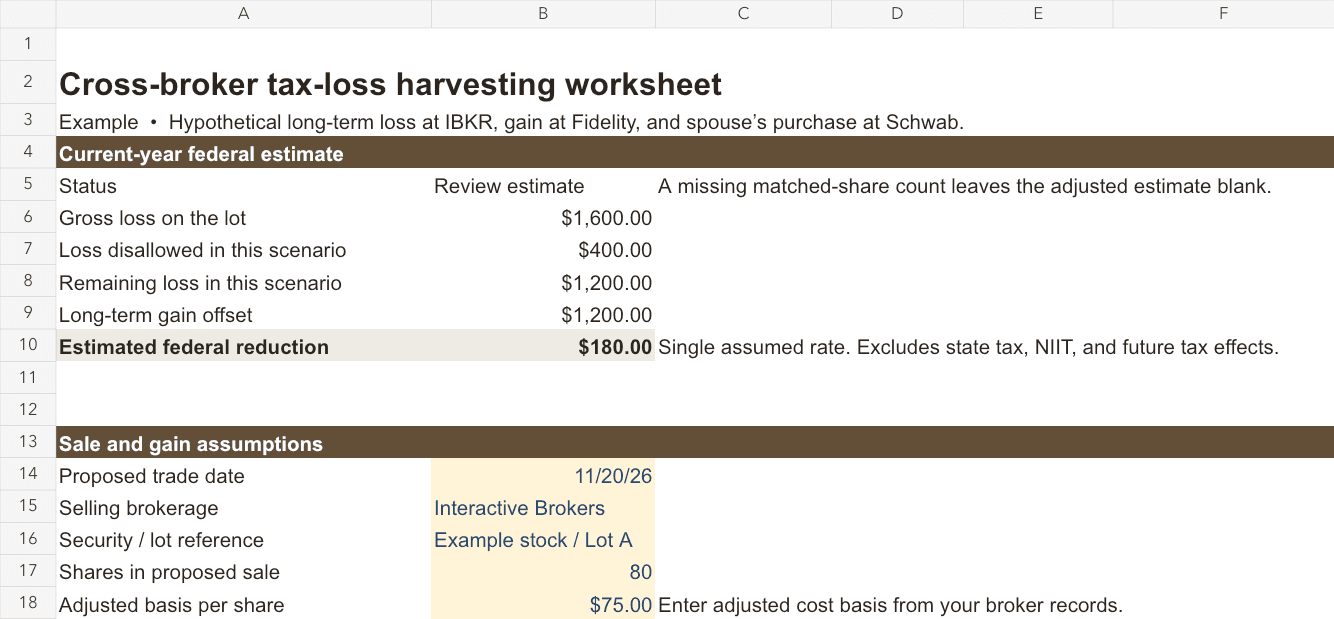
Use this free tax-loss harvesting spreadsheet to compare a possible loss sale at one brokerage with gains and replacement purchases elsewhere. It contains a blank planning sheet and a filled-in example. The worksheet models one long-term loss lot at a time. It calculates the effect of the matched share count you enter.
Download the tax-loss harvesting spreadsheet (.xlsx)What to collect before filling in the worksheet
- The proposed sale. Record the planned trade date, broker, lot, share count, adjusted basis per share, and estimated net proceeds per share.
- Your taxable gains. Use year-to-date realized gain and loss reports from every relevant brokerage. Enter the positive net long-term gain available to offset after accounting for other transactions and applicable netting. The sheet uses a single illustrative federal rate to estimate the current-year effect.
- Purchases across accounts. Record the trade date, account owner, broker, and shares for potentially relevant buys. Review spouse and IRA accounts when applicable. Include recurring investments, dividend reinvestments, and equity compensation where relevant.
How to use the spreadsheet
- Enter the sale details on Planning. The purchase log shows how many days each purchase falls before or after the sale.
- Review the period from 30 days before through 30 days after the planned sale. Treat the log as a review aid. Determine which purchases are substantially identical and how many sold shares they match under IRS Publication 550. Enter zero matched shares only after reviewing the relevant activity.
- Enter the matched share count, available net long-term gain, and rate. Review the gross loss, loss disallowed, remaining loss, and estimated current-year federal tax reduction. A scheduled purchase can change the estimate when it happens.
- Save the broker trade confirmation, lot identification, and purchase records with your tax files. Check the multi-brokerage harvesting guide for the wider account review.
Worked example with three brokerages
Suppose you have an $8,000 net long-term gain from Fidelity and are considering a sale of 80 shares at Interactive Brokers. The single long-term lot has a $75 adjusted basis per share and estimated net proceeds of $55 per share.
| Worksheet result | No matched shares | 20 matched shares |
|---|---|---|
| Gross lot loss | $1,600 | $1,600 |
| Loss disallowed | $0 | $400 |
| Loss available in this example | $1,600 | $1,200 |
| Estimated federal reduction at 15% | $240 | $180 |
The Example tab assumes the investor's spouse buys 20 shares of the same stock in a taxable Schwab account ten days after the sale. Each matched share carries a $20 loss, so $400 is disallowed and $1,200 can still offset the available gain. The disallowed loss generally increases the taxable replacement shares' basis. An IRA replacement can have a different basis consequence. IRS Publication 550 · IRS Revenue Ruling 2008-5
What the worksheet estimates
If you've already made the two trades and need to reconcile the tax form, see the Form 8949 example for a cross-brokerage wash sale.
The workbook estimates one potential sale under simplified long-term federal assumptions. Your return may involve short-term netting, different rates, state taxes, carryforwards, or additional transactions. Its purchase log flags dates in the review window for you to investigate. Lot matching and basis adjustments require your records and judgment. For ongoing account review, compare tax loss harvesting software with the spreadsheet workflow.